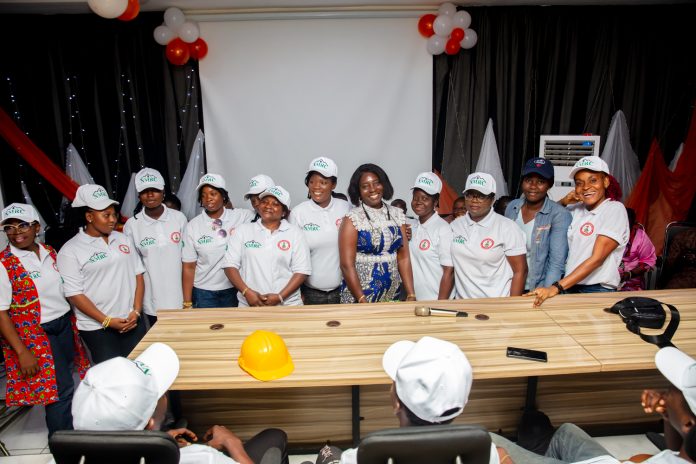
The Nigeria Mortgage Refinance Company (NMRC), in partnership with the Industrial Training Fund (ITF), successfully trained 40 young Nigerians in construction-related skills under its 2025 Corporate Social Responsibility (CSR) initiative, while simultaneously renovating key facilities at Normal College, Ogba.
The initiative aimed at addressing the shortage of skilled artisans within Nigeria’s housing sector by equipping young people with technical, vocational, and entrepreneurial skills essential for sustainable housing delivery, is expected to directly benefit over 200 students annually, while strengthening the pipeline of skilled artisans supporting Nigeria’s expanding housing supply chain.
Beneficiaries received hands-on training in Domestic Electrical Installation, Plumbing, Tiling, Plaster of Paris (PoP), and Event and Interior Decoration, with the latter designed to promote female participation and gender inclusion in vocational skills development.
The programme was delivered in two phases. The first phase involved two weeks of theoretical instruction at the ITF office in Ikeja, where participants were trained on technical principles, safety standards, and materials handling. This was followed by an eight-week practical phase, during which trainees applied their skills in live project environments under professional supervision.
As part of the practical component, trainees executed renovation works at Normal College, Ogba, including the refurbishment of the school’s Chemistry and Physics laboratories, replacement of PVC ceilings in the examination hall with Plaster of Paris finishes, tiling works, installation of an overhead water tank, construction of three new toilet facilities, and electrical upgrades across key areas of the school.
These improvements have significantly enhanced the learning environment for students while providing participants with real-world construction experience.
To further support long-term economic empowerment, NMRC and ITF organised a two-day entrepreneurship workshop covering financial management, marketing, and project management, equipping trainees with the tools required to operate independently and build sustainable livelihoods.
Each participant also received a trade-aligned starter pack to facilitate immediate entry into professional practice and reduce barriers to self-employment.
By integrating skills development with community infrastructure improvement, the initiative reflects NMRC’s commitment to strengthening Nigeria’s housing value chain through sustainable, impact-driven interventions.